

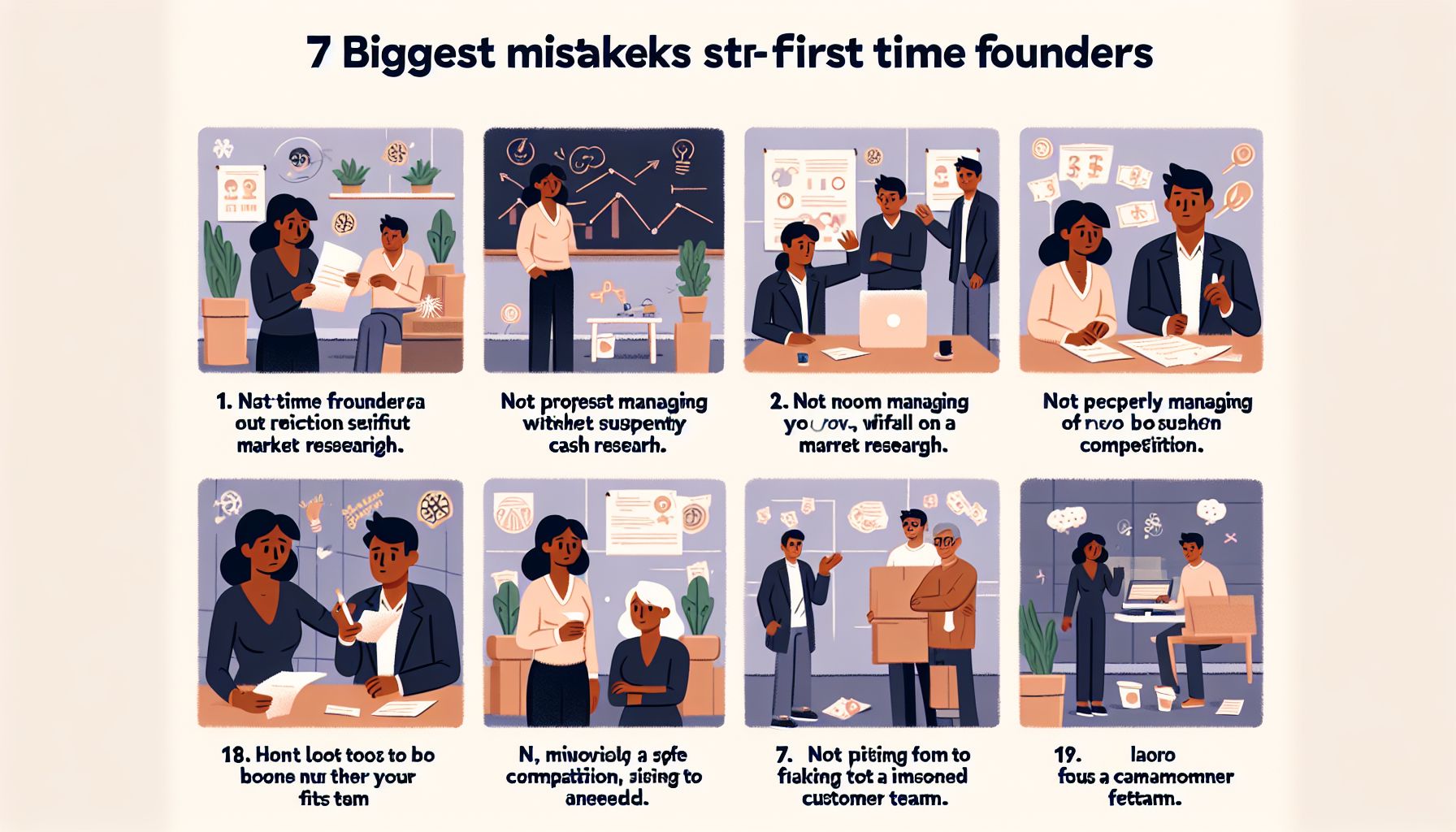
Starting a business is an exciting journey. However, first-time founders often make mistakes. Understanding these mistakes can help you avoid them. Here, we explore seven common mistakes and share tips on how to steer clear of them.
1. Lack of Market Research
Many first-time founders skip market research. They assume they know what the customer wants. This can lead to failure. Market research helps you understand customer needs.
How to Avoid: Conduct surveys to gather data. Analyze market trends. Study your competitors. Use this information to refine your product.
2. Ignoring Financial Planning
Financial planning is crucial. Some founders overlook costs. They underestimate expenses. This can strain resources.
How to Avoid: Create a detailed budget. Include all potential costs. Update your financial plan regularly. Seek advice from financial experts if needed.
3. Poor Team Building
A good team is key to success. Some founders rush to hire. They prioritize speed over skill. This can lead to a weak team.
How to Avoid: Take time to hire the right people. Look for skills that complement your strengths. Focus on cultural fit. Build a team that shares your vision.
4. Lack of Focus on Customer Feedback
Some founders design products without customer input. They miss valuable insights. This can result in a product that does not meet customer needs.
How to Avoid: Engage with your customers. Collect feedback regularly. Use the information to improve your products. Listen to what your customers say.
5. Ineffective Marketing Strategy
First-time founders sometimes fail to market effectively. They lack a clear strategy. Their message gets lost.
How to Avoid: Develop a solid marketing plan. Identify your target audience. Use social media and other channels. Track your marketing efforts to ensure they are working.
6. Overlooking Legal Requirements
Legal issues can derail a startup. Some founders ignore contracts and regulations. This can result in costly penalties.
How to Avoid: Consult with legal experts. Ensure all contracts are clear and enforceable. Stay updated on regulations related to your business. Protect your intellectual property.
7. Failure to Pivot
Founders sometimes stick to their original plan. They fail to adapt to changes. This rigidity can harm the business.
How to Avoid: Stay flexible. Be ready to pivot if needed. Monitor industry trends. Make changes when they are necessary for growth.
Conclusion
Avoiding these common mistakes can set your business on the right path. By doing thorough research, planning finances, building a strong team, getting customer feedback, crafting clear marketing strategies, understanding legal requirements, and staying flexible, you can increase your startup’s chances of success. Implement these tips and prepare to navigate your journey as a founder confidently.